
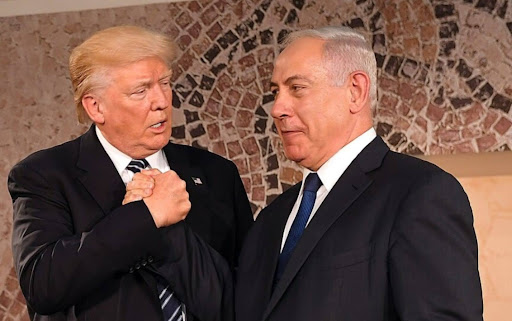
It is a small sentence with large implications: “I told him, ‘Don’t do that.'” When US President Donald Trump spoke those words about Israeli Prime Minister Benjamin Netanyahu’s decision to strike Iran’s South Pars gas field, he was acknowledging something that alliances usually keep private — that his advice had been ignored by his most important military partner. The moment was brief, but it was enough to raise fundamental questions about who is actually setting the pace and direction of the US-Israel war against Iran.
Netanyahu did not deny the characterization. He confirmed that Israel had acted alone in carrying out the strike, and agreed to Trump’s subsequent request not to do it again. His public handling of the situation was masterful in its way — accepting a narrow constraint while defending the broader principle of Israeli sovereign decision-making. But the fact remained: Trump had said don’t, and Netanyahu had done it anyway.
The consequences were significant. Iran retaliated with strikes across the Middle East. Global energy prices rose sharply. Gulf allies pressed Washington for greater oversight of Israeli military planning. Trump was left managing the fallout of a decision he had explicitly opposed. Senior US officials were dispatched to reassure allies and project unity — a task made more difficult by the transparency of Trump’s original comment.
Multiple sources reported that Washington had prior knowledge of the strike despite Trump’s initial claim of ignorance. US officials confirmed ongoing target coordination between the two militaries. The combination of Trump’s public objection, his claimed ignorance, and the reported prior knowledge suggested a relationship in which formal authorization and operational reality are not always in sync.
The deeper divergence — Trump’s nuclear-focused goals versus Netanyahu’s transformative ambitions — explains why these moments occur. As long as each leader is pursuing a different of victory, Israel will occasionally take actions that exceed American approval. “I told him, ‘Don’t do that'” may become a refrain of this war — a recurring sign that the alliance’s alignment is real but imperfect, and that its most consequential decisions are not always made together.